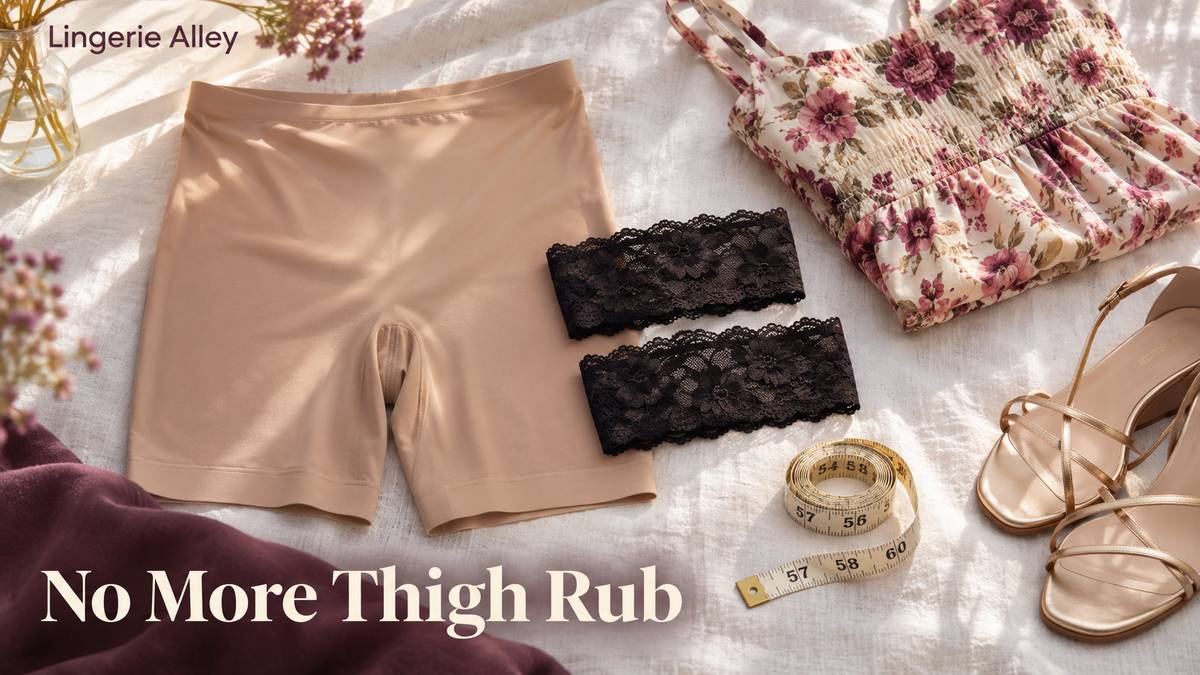
It usually starts around the second hour of a summer wedding, or halfway across a city on foot in a linen sundress. A warm spot high on the inner thigh, then a sting with every step, then the walk you adjust without meaning to. Pants never caused it because the fabric sat between your legs. A dress takes that barrier away, and skin rubbing on skin, plus a little sweat, does the rest.
The fix is not to change your thighs or skip the dress. It is to put the right layer back. This guide covers only stopping thigh rub, not smoothing or shaping. If you want compression, that is a different garment with different trade-offs, and our shapewear compression guide covers it. Here the goal is a layer so light you forget it is there.
Why Thighs Rub Under a Dress (and Not in Jeans)
Chafing is friction plus moisture plus repetition. Add sweat, and skin turns tacky, so each step drags instead of glides. Add a few thousand steps, and the skin gets worn raw.
Two details matter for choosing underwear:
- Where the contact happens. The rub zone usually sits in the top few inches of the inner thigh, but some people rub only at the very top and others along a longer strip. This decides the inseam you need.
- What moves. Anything that sits on the rub zone has to stay put. A layer that slides up into a roll is worse than nothing, because now you have a ridge of fabric being dragged across the skin.
Your Three Options
Slip shorts
Slip shorts are light, stretchy shorts worn under a skirt or dress, either over your underwear or instead of it. They cover the whole rub zone in one piece, which makes them the easiest choice for long days and for anyone who rubs along a longer strip of thigh.
What separates good ones from bad ones is construction, not branding:
- Inseam. Measure before you buy (see the test below). Slip shorts with a very short inseam of a couple of inches tend to ride up into the crease, because the hem lands right where the thighs press together. Longer inseams, often in the 5 to 9 inch range, have more fabric to anchor them.
- Leg hem. There are three common finishes. A bonded or laser-cut edge is flat and invisible under thin dresses but grips less. Wide flat elastic grips better and can show a faint line under clingy jersey. Silicone dots or a silicone strip inside the hem hold best on a moving leg, though some people find them warm after many hours.
- Inner seams. Look at the inside of the leg. A raised serged seam running down the inner thigh will rub exactly where you are trying to stop rubbing. Flatlock seams, or a seamless knit with no seam on the inner leg, avoid that.
- Gusset. If you plan to wear them without underwear, check for a lined cotton gusset. Many slip shorts are designed to be worn over underwear and have no lining.
- Fit. Size so the fabric lies flat with gentle stretch. If the waistband leaves a deep mark or the legs feel like they are squeezing, you have moved into shapewear territory, which is hotter and not needed for this job.
Thigh bands (bandelettes)
Thigh bands, often called bandelettes after the brand that popularized them, are elastic bands worn high on each thigh, usually lace or smooth knit with a silicone strip on the inside. They cover only the contact zone, over your usual underwear.
They suit very short dresses where shorts would show at the hem, hot days when an extra layer at the waist and seat feels like too much, and anyone who rubs only in a narrow strip at the top. The catch is sizing. Bands are sized by thigh circumference, and too loose means they slip down while too tight means a dent and a band of pressure all day. Measure around the fullest part of the thigh, right where it rubs, standing with your weight on both feet, and buy to that number rather than to your dress size.
Bands also struggle on freshly moisturized skin. Silicone grips clean, dry skin. If you put body lotion on in the morning, skip the inner thigh or let it absorb fully before you put the bands on.
Long-leg underwear and boxer briefs
The third route is underwear with a leg built in: boyshorts with a longer leg, or boxer-brief cuts with a real inseam. A boyshort often ends right at the crease, too high to reach the rub zone, while a boxer brief with an inseam of a few inches or more usually covers it. This route makes sense if you want one layer instead of two, and our guide to boxer briefs for women compares inseam lengths and hem finishes in detail.
Fabrics: What Glides, What Grabs
Fabric matters as much as cut. You want a surface that slides against itself and does not stay wet.
- Nylon and spandex. The usual slip short fabric for good reason. It has a slick, smooth face, it dries fast and it holds its shape. Thin, high-gauge knits feel cooler than thick, matte ones.
- Microfiber and microfiber mesh. Very smooth and light. Mesh panels breathe well, though open mesh against skin can feel slightly textured, so check the inside face.
- Cotton. Lovely for underwear, less good here. Cotton absorbs sweat and holds it, and damp cotton turns grabby. For a short, cool day it is fine. For a long, hot one, a synthetic usually stays drier.
- Modal and bamboo-based viscose. Soft and cool, but they can pill where the thighs rub, and pilled fabric is rougher than new fabric.
- Lace. On bands, lace works because the silicone does the gripping and the lace is just the face. On full slip shorts, lace on the inner thigh can feel scratchy over hours, so look for lace only at the hem.
Color matters for one reason: what you wear on top. Under white or pale linen, pick a shade close to your own skin tone rather than white, which shows through more than you would expect.
Fit Tests to Run Before You Leave the House
A mirror tells you little about chafing; movement tells you everything. Try these at home with the tags still on.
Find your rub line
Stand naturally in your underwear, feet hip-width apart, then walk a few steps and stop. Notice where your thighs meet and where the contact ends. Measure from the crotch down your inner leg to just past that point, then add about an inch. That is the minimum inseam that will keep a hem off the contact zone. For bands, that same spot is where you measure circumference.
The stair and squat test
Walk up and down a flight of stairs twice, then do three slow squats as if picking something up from the floor. Check the hems. If a slip short leg has rolled or ridden into the crease, it will do that all day, and a longer inseam or a silicone hem is the fix. If a band has slid down more than about half an inch, go down a size or try a wider band.
The ten-minute walk
Take a brisk ten-minute walk on a warm day. Check whether any seam or hem edge marks the skin, and whether the waistband rolls when you sit and stand. A rolling waistband usually means the rise is wrong for your torso, not that you need to size up.
Matching the Layer to the Dress
- Short minis and slip dresses. Bands, because shorts often peek out at the hem when you sit.
- Bodycon and clingy jersey. Slip shorts with a bonded or laser-cut hem, in thin nylon, so no edge shows through.
- A-line, wrap and linen sundresses. Anything works here, so pick for comfort: a mid-length slip short with a silicone hem is the most forgiving for a long day on foot.
- Wedding and formal gowns. Long days, lots of standing and walking, often heat. Longer slip shorts with flat seams, broken in before the day.
A half slip is not on this list on purpose. It solves static cling and see-through skirts, but the fabric moves and the hem usually sits above the rub zone; the slip guide covers when one is worth wearing.
If your hips and thighs are fuller than your waist, sizing slip shorts by your hip measurement rather than your waist usually gives the cleanest fit at the leg; the pear-shaped lingerie guide goes into how cuts sit on that shape.
Frequently Asked Questions
Can I wear slip shorts instead of underwear?
Some slip shorts are made for that and have a lined cotton gusset; check the product description or look inside before you try. If there is no lined gusset, wear them over your usual underwear. Either way, a seamless brief or thong underneath keeps the layers flat.
Will anti-chafing shorts make me hotter?
A thin nylon and spandex short adds very little warmth and can feel cooler than damp skin rubbing together. Thick shaping fabrics and long, tight legs are what trap heat. On the hottest days, bands add the least fabric of the three options.
What should I do if my thighs are already chafed?
Let the skin rest and keep it clean and dry, and avoid putting a tight hem right on the sore spot until it settles. If the skin is broken, blistering, weeping or not healing after a few days, check with a pharmacist or doctor rather than relying on underwear to fix it.
How do I wash bands and silicone-hem shorts?
Hand wash or use a mesh bag on a gentle cycle and air dry, because dryer heat breaks down spandex and elastic, and a slack band leans harder on the silicone to stay up. Skip fabric softener, which leaves a film that makes silicone grip less. If bands start slipping, washing the silicone strip with plain soap and water often brings the grip back.
Before your next long day in a dress, buy one pair of whatever you choose and wear it on an ordinary errand first. Ten minutes of real walking will tell you more than any size chart, and you will know whether to size down, go longer or switch to bands while there is still time to change.
Find Your Perfect Fit
Take our 60-second quiz and get personalized lingerie recommendations matched to your body, style, and budget.
Take the Quiz