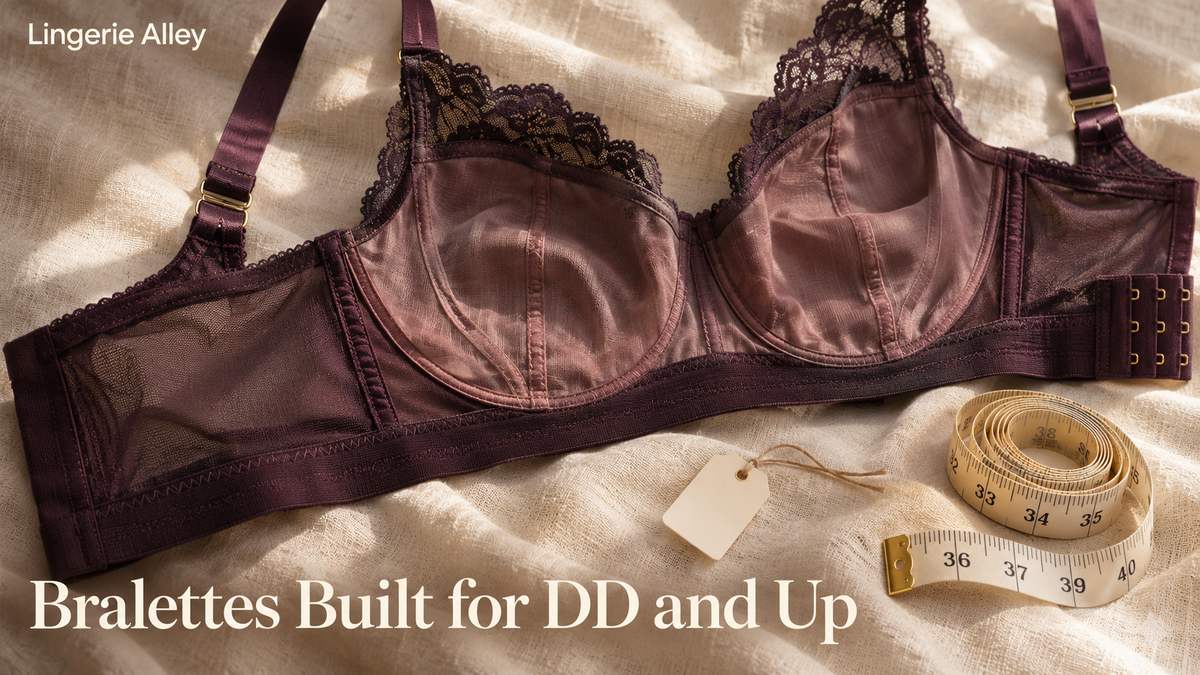
Turn a bralette over and read the tag. If it says M or L, the maker has picked one cup volume for every band that fits into that letter, and a 34G and a 38D are both being told they are a Large. That single detail explains most of the bad bralette experiences above a D cup: tissue spilling at the sides, the band riding up your back, the front sliding down by lunch. A bralette sized like a bra, with a band number and a cup letter, is a different garment, and it is the only kind this article is about.
Why S/M/L Bralettes Stop Working Above a D
Alpha sizing works on stretch. The fabric is meant to expand until it fits whatever is inside it, which is fine when there is not much weight to hold. At DD and up, stretch is the problem. A knit that stretches to fit your volume also stretches when you move, so the cup gives way each time you walk downstairs and never quite comes back.
Most S/M/L bralettes are also cut as triangles or simple scoops, flat shapes that get their depth from stretching. Fuller breasts need depth built into the pattern, through seams.
And the band is usually a narrow strip of plush elastic sized to a range. If your ribcage sits at the loose end of it, the straps end up doing the lifting, and shoulder grooves by evening show it.
What Band-and-Cup Sizing Changes
A bralette sold in sizes like 32F or 36DD is drafted the way a soft-cup bra is drafted. The maker sets a band length for each band number and a cup volume for each letter, then cuts the cup pattern to that volume. A few things follow from that:
- The band can be firm, because it only has to fit one ribcage measurement rather than a span of them.
- The cup has a fixed shape with seams, so it holds its depth without relying on stretch.
- The gore (the center piece between the cups) can be shaped to sit closer to the sternum, which keeps each breast in its own cup instead of merging into one.
- Your bra size carries over. If a 34F wired bra fits you well, a 34F bralette from the same brand, or one with similar sizing, is a sensible starting point, and sister sizes (34F to 32G or 36E) work the same way.
The trade-off is that you need to know your size, and you may need different sizes in different brands. If you have not been fitted in a while, the quiz includes a size step and a breast-shape step, and the shape matters here as much as the letter.
The Construction Tells That Matter Above a D
You can judge most of these from product photos and the inside of the garment. They are listed roughly by how much work they do.
A wide, firm underband
The underband carries most of the weight in any bra, and in a wireless one it carries more, because there is no wire spreading the load around the breast root. Look for a band that is at least an inch deep, made of firm elastic rather than a soft plush strip, and ideally with a hook-and-eye closure at the back. Two or three rows of hooks are a good sign. Pull-on styles can work, but you lose the option to tighten the band as the elastic ages.
Power mesh wings and side panels
Power mesh is a dense stretch mesh with strong recovery, the same type used in shapewear and in the wings of many wired bras. In a bralette it does two jobs. In the wings, it gives the band grip without bulk. Sewn as a side panel inside the cup, it steers tissue forward instead of letting it drift toward the armpit. If a product description mentions a side sling or side support panel, this is usually what it means. Ordinary lace backed with soft tulle does not do the same work, even if it looks similar in a photo.
Seamed cups
Look for a cup built from at least two pieces, with a vertical or diagonal seam. A three-part cup, with a seam across and another up the side, is the most common design for full busts because each panel can be angled to lift and project. A molded or spacer-foam wireless cup can also work, but foam cups have a fixed shape that suits fewer breast shapes, so they are a gamble if your breasts are fuller at the bottom or wider at the root.
A defined lower cup edge
Without a wire, something still has to mark where the cup ends and the band begins. In good full-bust bralettes this is a channel of stabilizing tape or a firmer elastic sewn along the bottom of each cup. It keeps the cup from riding up onto the breast and gives you a defined shape underneath, which matters under fitted tops.
Straps set closer to the center
Straps that attach toward the middle of the cup, rather than out at the side, are less likely to slip off and pull more directly upward. Wider straps spread pressure, but if they are doing most of the work, the band is too loose.
Coverage that suits your shape
A low-cut lace cup with a rigid scalloped edge that stops partway up the breast looks lovely laid flat and often lets fuller tissue spill over the top. A taller cup, or a stretch lace top edge that can move with you, is more forgiving. If your breasts are fuller on top or very projected, give this more weight than any other detail.
Five Tests Before You Keep It
Try a new bralette at home with the tags still on, when you have time to wear it around.
- The arms-up test. Raise both arms straight overhead. The band should stay level and the bottom of the cups should stay in place. If the band slides up toward your shoulder blades, go down a band size and up a cup letter, so 36F becomes 34G and the cup volume stays the same.
- The scoop and lean. Lean forward, gather tissue in from the side into each cup, then stand. Our guide on how to put on a bra properly shows the technique. If tissue escapes at the side or top after a minute of normal movement, the cup is too small or the wrong shape.
- The strap drop. Slide both straps off your shoulders. A well-fitted DD+ bralette will not give the same lift without them, but it should not collapse. If the cups fall away completely, the band is not working.
- The center check. Look at the gore. It should sit close to your chest rather than floating several fingers away. A floating gore usually means the cups are too small.
- The stairs test. Walk up and down a flight of stairs a few times. Some movement is normal in a wireless garment. Feeling each step as a drop is not, and that bralette is for lounging rather than errands.
Where a Supportive Bralette Fits in Your Week
Even a well-built bralette will not match a wired bra for shape under a fitted top, and it is not a sports bra. It works best on long sitting days, travel days, under loose knits or as a visible layer under an open shirt. Our bralette vs bra breakdown covers which job goes to which garment, so here is the narrower point: if you have only tried alpha-sized bralettes, your sense of what a bralette can do at DD and up is probably based on the wrong garment.
When you shop, filter by size first and by look second. Brands that already sell full-bust wired bras in band-and-cup sizes are the most likely to apply the same sizing to their soft-cup lines, and you can browse them by category in our brand directory. Check the size range of the specific style, since a label that goes to a K cup in wired bras may stop much lower in its bralettes.
Once you find a bralette that passes all five tests, write down the exact style name and size and check the brand's other soft-cup styles first next time. Fit is far more consistent within one brand's pattern than across brands, even when the size on the label is the same.
Frequently Asked Questions
Can a bralette be supportive enough for everyday wear at a G cup?
It can for some people and some days, if it is sized by band and cup and has a firm band, seamed cups and side support. Many full-bust wearers keep one for desk days and travel and switch to a wired bra for fitted clothes. Your shape and tolerance for movement decide the rest.
Should I wear my usual bra size in a bralette?
Start with your wired bra size from the same brand or a brand with similar sizing, then check fit with the tests above. Some soft-cup styles fit slightly smaller in the cup because there is no wire holding the cup open. If the gore floats or tissue escapes at the side, try one cup size up before changing the band.
Why does my bralette band roll up at the bottom?
Rolling usually means the band is too narrow, too soft or too loose for the weight it is carrying. A deeper band with firm elastic is less likely to fold. If the band is new and still rolls, a smaller band size with a larger cup may fix it.
How long does a full-bust bralette keep its support?
Elastic and mesh lose recovery with wear and heat, and a wireless garment depends on them more than a wired bra does. Washing by hand or on a gentle cycle in a mesh bag and drying flat helps. When you are on the tightest hook and the band still rides up, it is time to replace it.
Do longline bralettes support more than short ones?
A longline section adds band depth, which spreads pressure over more of your ribcage and makes the band less likely to roll. It does not fix an undersized cup or a band that is too loose. Treat the extra length as a comfort gain and judge support by the band fit and cup construction.
Find Your Perfect Fit
Take our 60-second quiz and get personalized lingerie recommendations matched to your body, style, and budget.
Take the Quiz