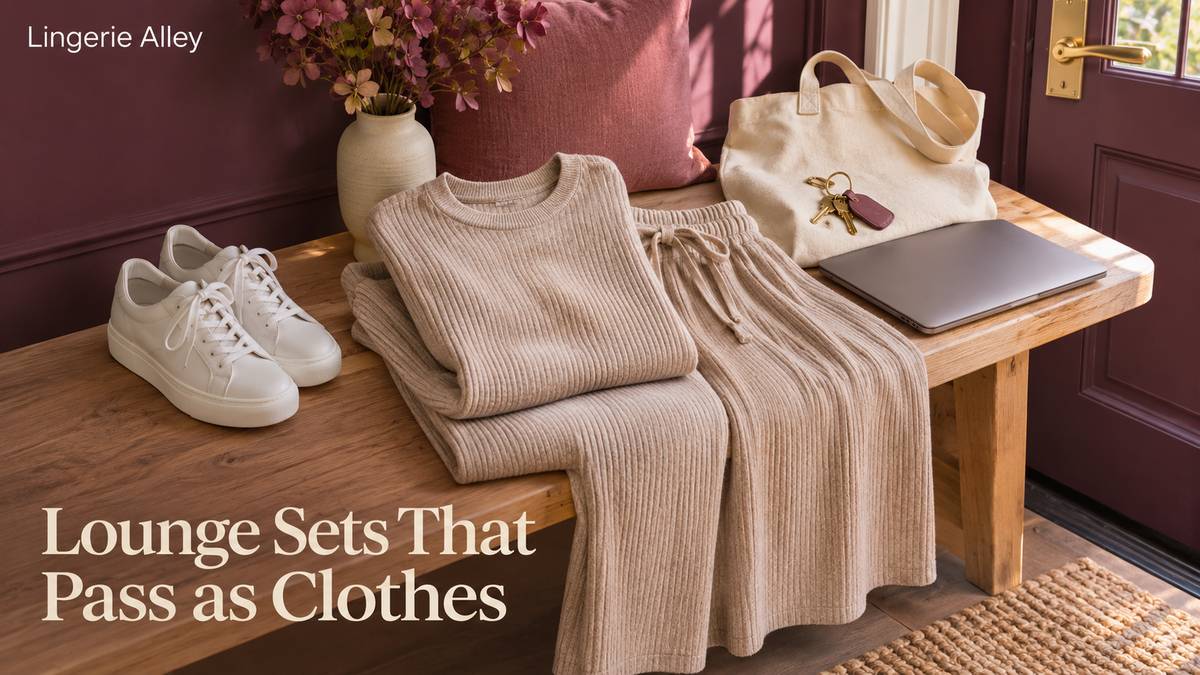
Stand in front of your front door in the set you are considering, in daylight, and imagine the neighbor knocking. If your first instinct is to grab a coat, it is pajamas. If you would open the door without thinking, it is loungewear. That split second is the whole test, and most of what makes a set pass it comes down to fabric weight, waistband construction and how the hems are finished.
This guide is about daytime sets: the ones you work in, walk the dog in and wear to pick up a prescription. Sleep has its own priorities (temperature, how a fabric feels against skin at 3 a.m.), and those are covered in our piece on how what you wear to bed affects your sleep. Here the question is narrower. Does the set read as clothing?
What separates loungewear from pajamas
The labels blur online, so ignore the product name and look at four things.
Fabric weight. Pajama knits are often light single jersey, which drapes close to the body and shows every line underneath. Daytime sets tend to use heavier or denser knits: French terry, ponte, thick rib, interlock or brushed fleece. A heavier fabric holds its own shape instead of taking yours, which is what makes it look intentional. If a listing gives fabric weight in GSM (grams per square meter), mid-weight knits in roughly the 200 to 300 range usually sit right for year-round daytime wear. Under that, the fabric starts to cling and turn see-through when stretched.
Surface texture. Rib, waffle and terry loops break up light, so they look like knitwear rather than bedding. A flat, shiny modal reads as sleepwear even in a good cut. Texture also hides creases from sitting at a desk all day.
Trim. Piping, contrast bands, lace edging and tiny bows are pajama signals. Daytime sets keep detailing to the construction itself: a ribbed cuff, a split hem, a patch pocket.
Cut. A boxy top with a dropped shoulder, or a crewneck sweatshirt shape, reads as clothing. A camisole with spaghetti straps reads as bedroom, no matter the fabric.
The fabrics that pass, and where each one falls short
No fabric wins everywhere. Pick by where you will spend the most hours.
French terry
Smooth on the outside, little loops on the inside. It is the classic sweatsuit fabric for a reason: it is structured enough to hang well, breathes better than fleece and softens with washing. The weakness is bulk. A terry jogger can look heavy at the ankle, and some French terry stretches out at the knees and seat by evening. Look for some elastane in the blend (a few percent) if you want it to recover.
Ribbed knits
Rib is the easiest way to look dressed at home. A wide rib, sometimes called a 2x2 rib, has strong vertical lines that look like a sweater. It stretches crosswise and recovers well, so it skims rather than grips. The trade-off is that rib follows the body closely and will show the outline of a bra band or underwear seam, which matters if you care about a smooth line.
Ponte
A double knit, firm and almost woven in feel. Ponte pants can go straight from a video call to a lunch out with flat shoes, and nobody will read them as lounge pants. Ponte is the least cozy option on this list, and the cheaper blends can pill along the inner thighs where fabric rubs.
Modal and cotton-modal blends
Modal is soft, drapes beautifully and keeps color well through washing. Pure modal in a light weight is pajama territory. Blended with cotton and knitted heavier, it becomes a good warm-weather daytime set. Check it in daylight before trusting it outside: light modal can be sheer when you bend.
Cashmere and wool blends
A knitted cashmere or merino jogger set looks the most "dressed" and handles temperature well. It also asks the most of you in care (hand washing or a delicate cycle, flat drying) and wears thin at the elbows and inner thighs over time. Treat it as an investment set you rotate, not the one you live in five days a week.
Construction details that decide whether a set looks like clothing
Two sets in the same fabric can look completely different because of how they are sewn.
The waistband
This is the most important detail on lounge pants. A thin drawstring threaded through a soft fold tends to roll, twist and gather into ruffles at the waist, which looks like pajamas. A wide, flat elastic band (often an inch and a half or more, encased in fabric) lies smooth under a tucked or half-tucked top. Some sets combine a flat band with a decorative drawstring, which gives you both.
Sit down in the pants before you keep them. If the waistband folds over when you sit, it will do that all day at your desk.
Hems and cuffs
Look at the inside of the hem. A coverstitch hem (two parallel lines of stitching on the outside, a looped thread on the inside) is the same finish you see on decent T-shirts and reads as ready-to-wear. A raw or rolled edge can look deliberate on some fabrics but often curls after a few washes.
At the ankle, you have three choices. A ribbed cuff (jogger) looks sporty and keeps hems off wet pavement. A straight or wide leg looks more polished, especially in rib or ponte, and works with loafers or clean sneakers. A split hem on a straight leg looks the most like trousers.
Seams and pockets
Side seams should hang straight down the leg, not twist toward the front. A twisting seam usually means the fabric was cut off-grain, and washing will make it worse. Then check the pockets. Deep side pockets that hold a phone without pulling the pants down are the difference between running an errand and carrying your phone in your hand.
The top
A top that ends at the hip with a banded or split hem looks finished. A top that is long and slightly flared looks like a nightshirt. Shoulder seams should sit at or just past your shoulder bone, unless the drop shoulder is clearly part of the design.
Five tests before the tags come off
Do these at home, in daylight, before deciding to keep a set.
- The doorway test. Stand by a window in natural light. Look for sheerness at the seat and thighs, and for any outline of underwear showing through.
- The bend test. Touch your toes in front of a mirror. Thin knits open up when stretched, which is when sheerness shows.
- The sit test. Sit for ten minutes the way you sit to work. Stand up and check the knees for bagging and the waistband for rolling.
- The camera test. Open your laptop camera. Fine stripes and very small patterns can shimmer on video. Very pale colors can wash out under a screen's light, and dark rib can show lint. A neckline that is fine in a mirror may look lower on a camera angled slightly down at you.
- The pocket test. Put your phone and keys in the pockets and walk around. If the pants slide down, the waistband is too soft for daytime.
What to wear underneath
Daytime loungewear changes what works underneath. Close-fitting rib shows bra bands and lace texture, so a smooth wireless bra or a bralette with flat edges keeps the line clean. Under a boxy terry top, almost anything works, including a lace bralette you like the look of at the neckline.
For bottoms, seamless or laser-cut underwear avoids lines under rib and ponte. If you wear a wide-leg set on errands in the summer, the inner thighs can rub, and a pair of slip shorts or a longer brief helps.
If you are not sure which bra style suits your shape under knits, the style quiz includes a breast-shape step and points you toward cups and constructions that sit smoothly.
Building a small rotation
You do not need many sets. Two or three cover most weeks:
- One structured set (ponte or heavy rib) for calls, appointments and lunch out.
- One soft set (French terry or brushed knit) for long home days and cold mornings.
- One warm-weather set (cotton-modal or a lighter rib, short sleeve or shorts) for summer.
Buy separates when a brand sells them that way, since tops and bottoms often fit differently. Keep the colors neutral enough that the top also works with jeans and the pants with a plain T-shirt, so the set earns its space twice. And when a set passes all five tests, write down the fiber blend from its care label. After two or three keepers you will know your composition, say a cotton-modal rib with a few percent elastane, and can filter listings by it instead of by photos.
If you are shopping for the soft end of this rotation and torn between premium sleep brands that also sell lounge pieces, our Eberjey vs Lunya comparison covers how modal and washable silk behave over time. For other labels, browse the brand directory and filter by the categories you care about.
Frequently Asked Questions
Can I wear a loungewear set to the grocery store?
Yes, if it passes the doorway and bend tests. A heavier knit with a flat waistband and finished hems looks like casual clothing. Add real shoes rather than slides, and a jacket or overshirt if you want it to look more put together.
How do I stop lounge pants from pilling?
Pilling comes from friction, mostly on the inner thighs and seat. Wash sets inside out on a gentle cycle, skip the dryer or use low heat, and wash them separately from towels and jeans. A fabric shaver removes pills that have already formed.
What colors look best on video calls?
Mid-tones usually work best on camera. Very pale shades can look washed out, very fine stripes can flicker, and pure black can lose detail. Solid colors with a little texture, like rib, tend to look most like a sweater on screen.
Should a loungewear set fit loose or close?
That depends on the fabric. Structured knits such as ponte and heavy rib can fit closer and still look polished. Soft fabrics like French terry and light modal look more intentional with some ease, especially at the hip and seat.
Find Your Perfect Fit
Take our 60-second quiz and get personalized lingerie recommendations matched to your body, style, and budget.
Take the Quiz