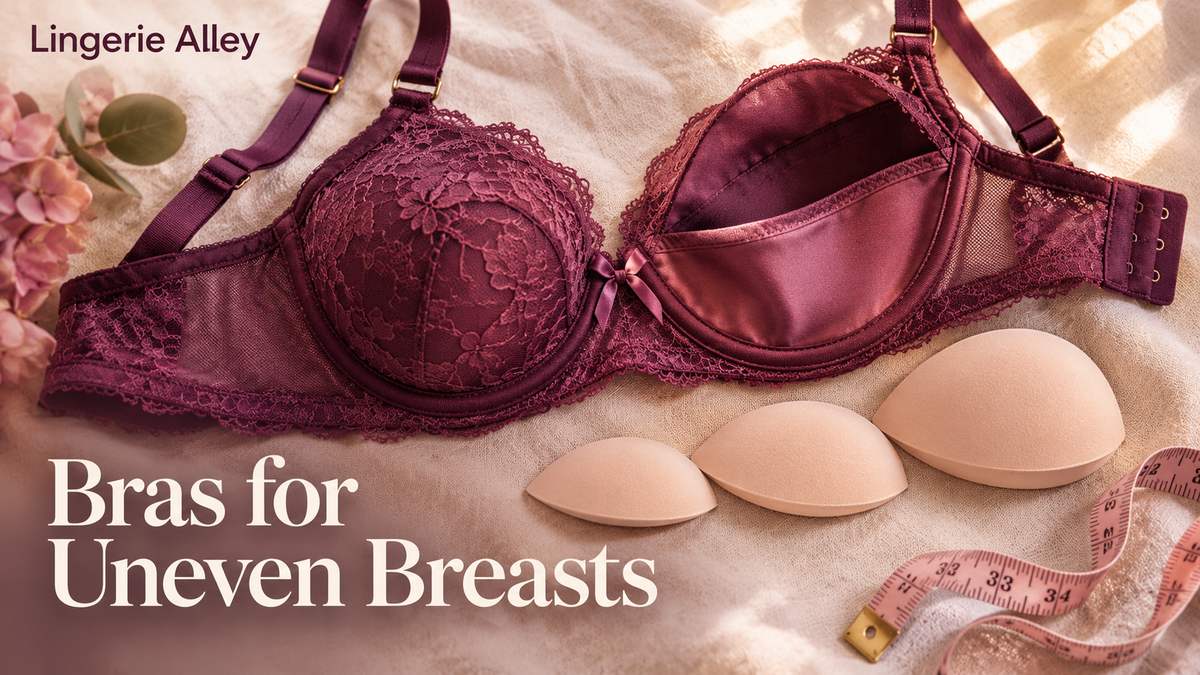
Put on your best-fitting bra, lean forward, settle each breast into its cup, then stand up and look in the mirror. If one cup sits smooth and full while the other has a small ripple at the top, or one neckline edge digs in while the other floats, you are looking at asymmetry. You are also looking at the most common fit situation there is. The NHS describes it as normal for breasts to be slightly different sizes, so a perfectly matched pair is not the baseline to measure yourself against.
The difference only becomes a fitting question once it shows: a gap you can see through a T-shirt, a cup that cuts on one side, a strap you keep adjusting on one shoulder only. The method below works for a quarter-cup difference and for a difference of two or more cup sizes. It has two steps, and the order matters.
Step One: Fit the Larger Breast, Not the Average
The instinct is to split the difference and buy the size in between. That leaves the larger breast squeezed and the smaller one slightly loose, so neither side fits and the wire sits on tissue on the larger side. Over a day, that is the side that aches.
Instead, measure and try on as if only your larger breast existed.
- Band first. The band is shared, so it does not change. Fasten it on the loosest hook, check it sits level all the way around, and confirm you can slide two fingers under the back and not much more.
- Cup for the larger side. Scoop the larger breast fully into its cup. The wire should sit behind the tissue, on your ribcage, all the way along the fold. The neckline edge should lie flat without cutting a line into the top of the breast.
- Ignore the smaller cup for now. It will have some empty space. That is expected and it is what step two fixes.
When you go up a cup for the larger side, keep the band where it was. Cup letters only mean a volume relative to a band, so 34D and 32DD hold roughly the same amount. If a store has the cup you need only in a neighboring band, sister sizing tells you which size gives the same volume and what that does to the band fit.
Check the wire on both sides
Run a finger along each wire after you have scooped. On the larger side it should trace the full root of the breast. On the smaller side it will often sit slightly wider than the tissue, with a little bare skin inside the wire. That is fine. What you do not want is one wire sitting lower than the other, which usually means the heavier side is dragging the bra down. Shorten the strap on that side by a centimeter or two and look again. If it still sits low, the larger cup is probably too small and is being pushed off the fold.
Step Two: Balance the Smaller Side
Once the larger side fits, you are dealing with one cup that has extra volume. How you fill it depends on how much space there is.
A quarter to a half cup: let the fabric do it
For small differences, the cheapest fix is a cup that adapts. Look for:
- Stretch lace or mesh across the top of the cup. The upper part of the cup flexes to the breast in it, so a slightly smaller breast does not leave a gap. This is the single most useful feature for mild asymmetry.
- Unlined, three-part seamed cups. The seams shape the cup to the breast, and soft fabric collapses gently over a smaller volume instead of standing away like foam does.
- Bralettes and soft-cup bras sized by band and cup. With no wire and no molded shell, a small difference rarely shows.
The style to be wary of is the molded T-shirt bra. A rigid foam cup keeps its shape whether or not it is full, so any empty space becomes a visible dent under a fitted top.
Half a cup to one full cup: add a cookie
Cookies are removable foam or gel pads, usually crescent or oval shaped, that sit in a pocket inside the cup or simply under the breast. Many padded and push-up bras ship with them, and they are sold separately in packs of different thicknesses.
How to place one:
- Put the cookie at the bottom and outer edge of the smaller cup, under the breast, not on top of it. This lifts the tissue so the two sides match in height as well as volume.
- Scoop and settle the breast on top of it.
- Face the mirror, then turn side-on. From the front, the fullest points of the two cups should sit at about the same height; from the side, the two necklines should look equally full.
- If the smaller side now looks higher, swap to a thinner pad or move it slightly toward the center.
A bra with built-in cup pockets is easiest, because the pad cannot migrate. If yours has no pocket, a pad with a slightly tacky silicone back will stay put better than plain foam. Take out the cookie that came with the larger side, if the bra had two; you want padding in one cup only.
One full cup or more: change the strategy
Beyond roughly a cup of difference, a single cookie starts to look like a lump, and the fix shifts:
- Graduated or stacked inserts. Some pads are shaped thicker at the bottom and taper toward the top, which mimics breast tissue better than a flat cookie. Two thinner pads stacked can also look smoother than one thick one.
- Partial breast forms. Shell-shaped silicone forms, often sold for mastectomy and lumpectomy wear, fill a larger volume and have weight, which helps the bra sit level. You do not need to have had surgery to use them, and a specialist bra fitter can help you choose a size.
- Pocketed bras. Bras designed to hold a form have a full pocket across the inside of each cup. They are made for post-surgery wear but work for natural asymmetry too, and our guide to post-surgery bras explains what those pockets and softer bands look like.
- Custom-made bras. Some independent bra makers will make each cup to its own pattern. This costs more and takes time, but it is the one route where neither side is compromised.
Bra Cuts That Blur or Show a Difference
The cut of the bra changes how much a difference shows. A rough guide, from most forgiving to least:
- Stretch-top balconettes and soft-cup bras. Flexible upper edges follow each breast.
- Plunge bras with angled padding. Padding that sits low and outer on both sides makes small differences harder to see, especially if you add a cookie to the smaller side.
- Full-coverage seamed cups. These hold each breast without the visible top edge of a demi cup.
- Demi cups and molded shells. The low, straight neckline or rigid foam shows any mismatch. They can still work, but they are the ones that need the most careful balancing.
Straps and band tweaks
The bra often tells you which side is larger before the mirror does. The strap on the heavier side does more lifting, so it loosens faster, and some people find that side's strap slipping. Adjust each strap separately, not to the same length, and check them again after a few washes. If the band rides up on one side only, the cups are pulling it, which usually means the larger cup is too small rather than the band too loose.
When to Get a Change Checked
Long-standing asymmetry, the kind you have had since your teens or since pregnancy or nursing, is a fit question. A new difference is a different matter. The NHS lists a change in the size or shape of one or both breasts among the symptoms to get checked by a GP, and the American Cancer Society's list of breast changes to report includes a new lump, swelling of part of a breast, and skin or nipple changes such as dimpling or a nipple turning inward. If one breast has recently grown, shrunk or changed shape, book that appointment before you buy anything. Fitting can wait a week.
Frequently Asked Questions
Is it normal for one breast to be a full cup size bigger?
Yes, a full cup difference is common and is usually just how your body developed. Differences often shift a little with your cycle, pregnancy, nursing and weight changes. A new or sudden change is different, and worth showing to a doctor.
Can I wear a push-up bra with uneven breasts?
You can, and push-ups are often the easiest place to start because most come with removable pads. Take the pad out of the larger side and leave it in the smaller side, or swap in a thicker one there. Check the result in a fitted top, since the neckline is where differences show.
Should I buy a different size for each breast?
Retail bras come with matched cups, so buy for the larger breast and balance the smaller one. The only way to get two cup sizes in one bra is custom making, which some independent makers offer. A stretch-top cup or an insert gets most people close enough for everyday wear.
Do swimsuits work the same way?
Mostly, yes. Look for swim tops with removable pads and an inner pocket, fit the larger side, and add a pad to the smaller one. Bikini tops with adjustable tie or slide sides also let you set each triangle independently.
Your Next Step
Before your next fitting, pick one bra you already own that fits the larger side well and spend five minutes with whatever pads you have: one, two, thin, thick, low, outer. Note which combination looks even in a plain fitted T-shirt. That is your target, and you can take it into a store or use it to read product pages. If you are not sure which cup shape suits your tissue in the first place, the breast-shape step in our style quiz narrows the bra cuts worth trying before you start balancing.
Find Your Perfect Fit
Take our 60-second quiz and get personalized lingerie recommendations matched to your body, style, and budget.
Take the Quiz